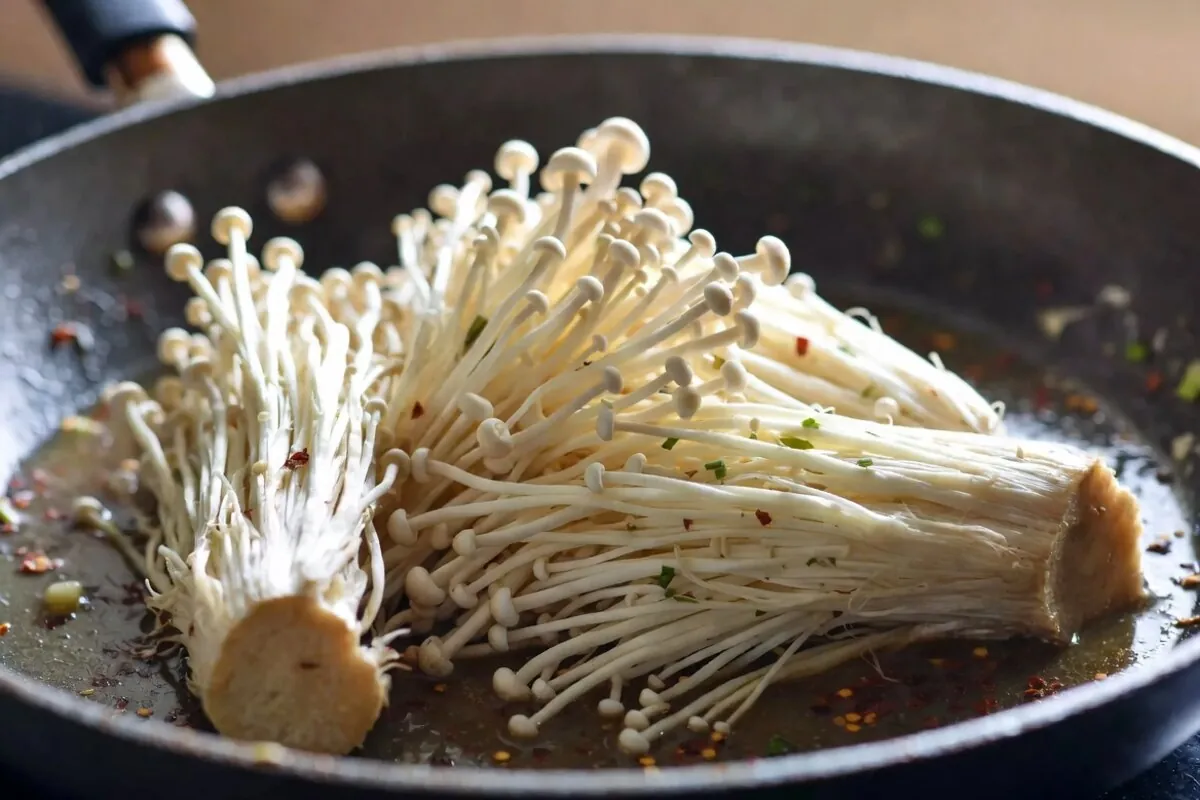
Enoki’s delicate structure
Enoki mushrooms have long, slender white stems and tiny rounded caps that grow in dense clusters. Their texture is tender and slightly springy when cooked, so the goal is to soften the stems without burning the caps.
Cook them thoroughly
For food safety, cook enoki mushrooms thoroughly rather than serving them raw or undercooked. The finished stems should be fully wilted and hot throughout.
Keep the bundles manageable
After trimming the root base, separate the mushrooms into small bundles. This gives the stems contact with the pan while keeping the tiny caps attached.
Garlic-Butter Enoki Mushroom Skillet
Ingredient amounts are scaled. The steps below still quote the original amounts — follow the list above.
Ingredients
Instructions
Cook times
| Method | Time | Done when |
|---|---|---|
| Pan quick cook | 2–4 min | Just wilted; stems still springy. |
| Broil | 3–5 min | Tips browned, bundles softened. |
Small fixes that matter
- Cut off only the dense root base; trimming too high can make the small caps fall apart.
- Avoid high heat, which can scorch the thin stems before the center is cooked.
- Use tongs or chopsticks to turn the bundles gently instead of stirring them into fragments.
Variations
- Dairy-free: replace the butter with 1 tsp toasted sesame oil.
- Miso: add 1 tsp white miso with the soy sauce.
- Nori: wrap each cooked bundle in a small piece of nori before serving.
- Fuller meal: add sliced tofu for a fuller skillet dish.
Storage and reheating
- Keep unopened enoki mushrooms refrigerated in their original package and follow the package date.
- Once opened, use them promptly, ideally within 1–2 days.
- Refrigerate cooked leftovers in an airtight container for up to 3 days.
- Discard mushrooms with a sour odor, dark wet patches, or excessive slime.
Frequently asked questions
Do enoki mushrooms need to be fully cooked?
Yes. Cook them until the stems are completely wilted and hot throughout rather than serving them raw or undercooked.
How do I trim enoki mushrooms?
Slice off the compact, dense root base, then separate the remaining stems into small bundles.
Why are my enoki mushrooms still crunchy?
They need more time in the skillet. Continue cooking until the stems soften and lose their rigid, raw texture.
Are long white stems and tiny caps normal for enoki mushrooms?
Yes. Those features are characteristic of cultivated enoki mushrooms.
What can I use instead of enoki mushrooms?
Shimeji mushrooms make the closest textural substitute, though they need a longer cooking time and have broader caps.
Good with
steamed rice, miso soup, grilled salmon, lettuce wraps, cold soba.
Related guides
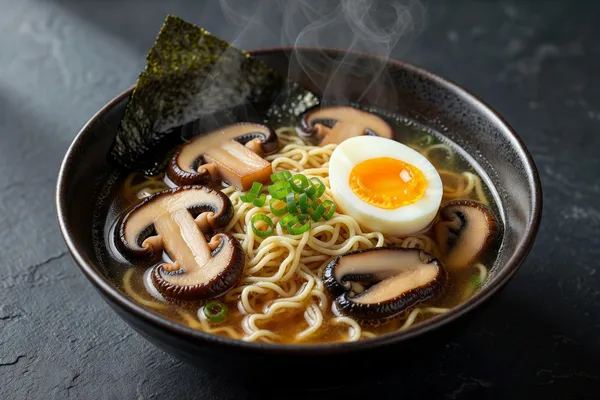 45 minShiitake mushroom ramen recipeSteep dried shiitake and kombu into a savory broth, sear fresh shiitake caps, and build a deeply flavored vegetarian ramen bowl in 45 minutes.
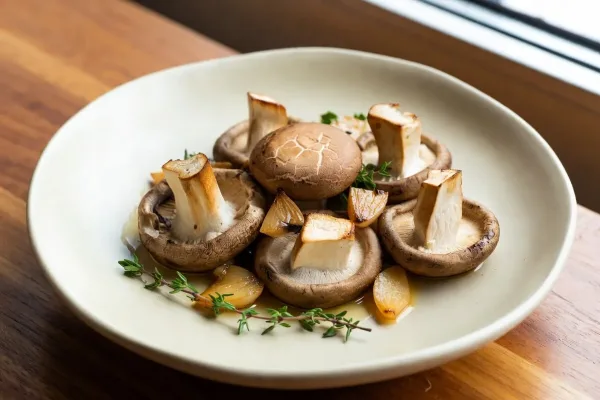 6 minHow to cook shiitake mushroomsLearn how to cook shiitake mushrooms until browned and tender, then finish them with garlic, thyme, soy sauce, and lemon.