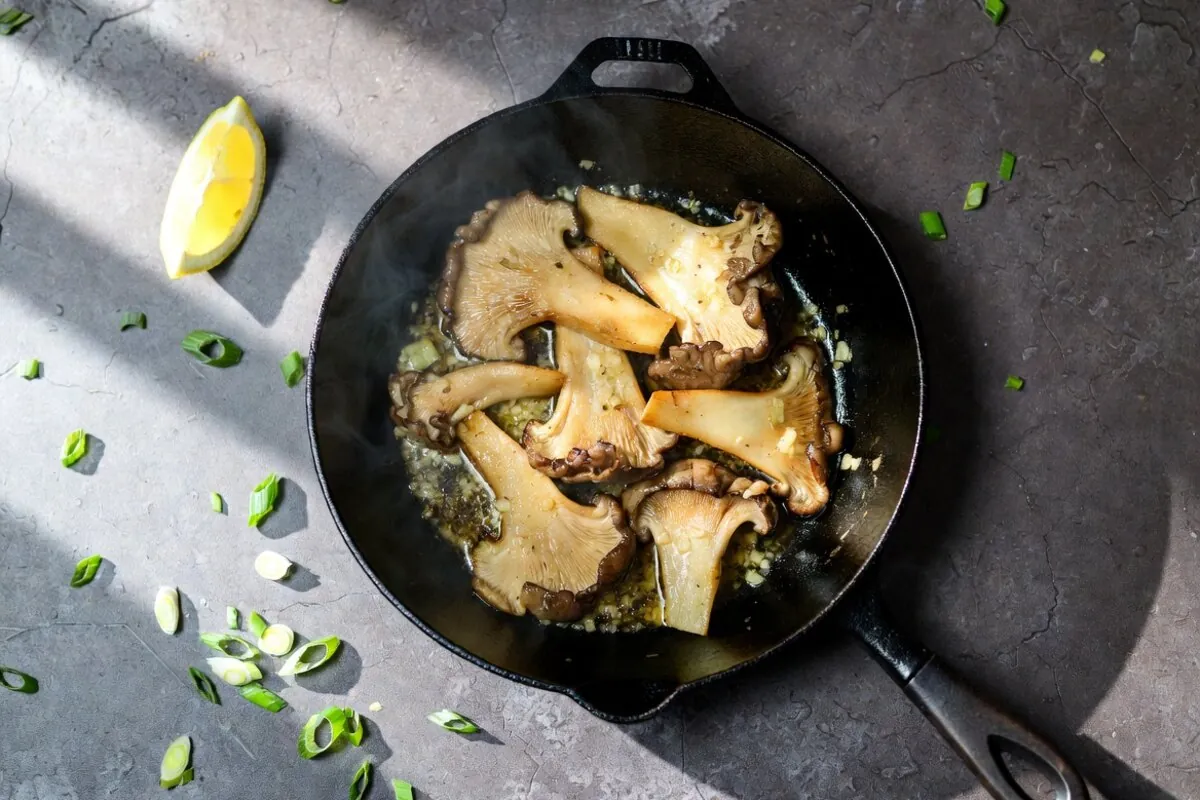
Why this method works
Tearing oyster mushrooms creates irregular edges that brown well. The mushrooms need room in the pan, so the recipe builds color first and adds butter, garlic, and seasoning only after the moisture has cooked away.
Buy and prep
Cultivated oyster mushrooms are the simplest choice for this recipe. If using wild-harvested oyster mushrooms, use only market-purchased specimens or mushrooms verified by a qualified expert. This guide does not identify mushrooms or establish that a wild find is safe to eat.
Crisp-Edged Garlic Oyster Mushrooms
Ingredient amounts are scaled. The steps below still quote the original amounts — follow the list above.
Ingredients
Instructions
Cook times
| Method | Time | Done when |
|---|---|---|
| Pan sauté | 7–9 min | Lacy edges turn golden and tender. |
| Air fryer | 8–10 min | Edges crisp, centers still juicy. |
| Oven roast | 15–18 min | Torn edges browned and crisp. |
Small fixes that matter
- Tear rather than finely slice the caps to create better browned edges.
- If the skillet looks crowded, cook the mushrooms in two batches.
- Add soy sauce near the end so it seasons the mushrooms without making the pan too wet.
Variations
- Sesame: replace the butter with 1 tsp toasted sesame oil and finish with sesame seeds.
- Herb: omit the smoked paprika and add 1 tbsp chopped parsley.
- Chili-lime: replace lemon juice with lime juice and add a pinch of chili flakes.
- Miso: replace the soy sauce with 1 tsp white miso loosened with 1 tsp water.
Storage and reheating
- Refrigerate uncooked oyster mushrooms in a paper bag for up to 5 days, checking their condition before use.
- Refrigerate cooked mushrooms in a covered container for up to 3 days.
- Reheat in a hot skillet to restore some edge texture.
- Freeze cooked mushrooms only if you plan to use them later in soup, sauce, or a filling.
Frequently asked questions
Should I wash oyster mushrooms?
Brush them clean first. If they need a rinse, do it quickly and dry them thoroughly before they hit the pan.
Do I eat the oyster mushroom stems?
Tender stems can be eaten. Trim away only the dry, woody, or tightly clustered base.
Why are my oyster mushrooms soggy?
The pan may be crowded, the mushrooms may be wet, or the heat may be too low. Use a wide pan and let the first side brown before stirring.
Can I use oyster mushrooms in a sauce?
Yes. Brown them first, then add them to pasta sauce, gravy, soup, or a stir-fry near the end of cooking.
How do I handle wild oyster mushrooms?
Use market-purchased mushrooms or have wild specimens verified by a qualified expert. This recipe cannot confirm the identity or safety of a wild find.
Good with
steamed rice, soba noodles, toasted sourdough, polenta, fried eggs.
Related guides
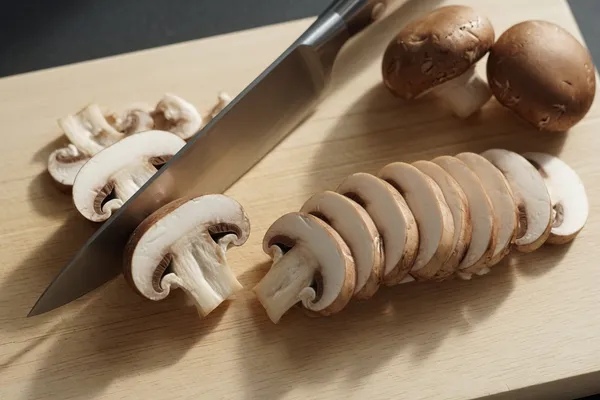 5 minHow to cut mushroomsSlice mushrooms about 1/4 inch thick for the pan, halve or quarter them for roasting, and tear oyster and maitake by hand rather than cutting them.
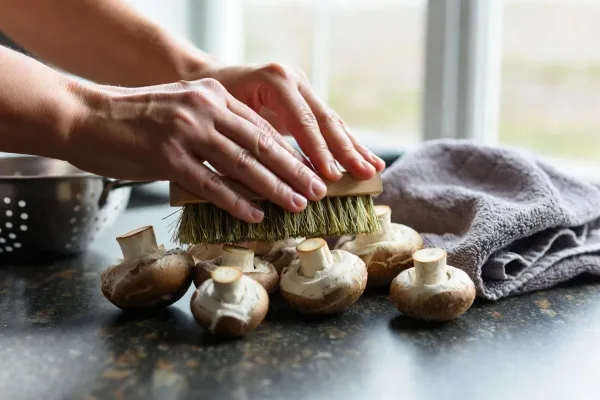 4 minHow to clean mushrooms before cookingClean mushrooms with a brush, damp towel, or a quick rinse—never a soak. What to use for each variety so they brown instead of steam.
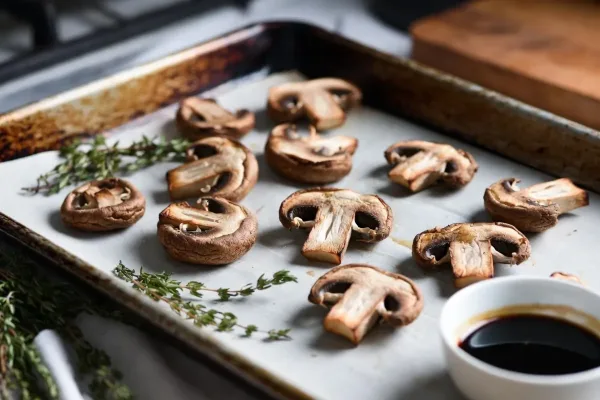 6 minHow to roast mushrooms in the ovenRoast mushrooms at 400°F for 20–25 minutes on an uncrowded sheet pan, flipping once, until browned and concentrated—not steamed or soggy.
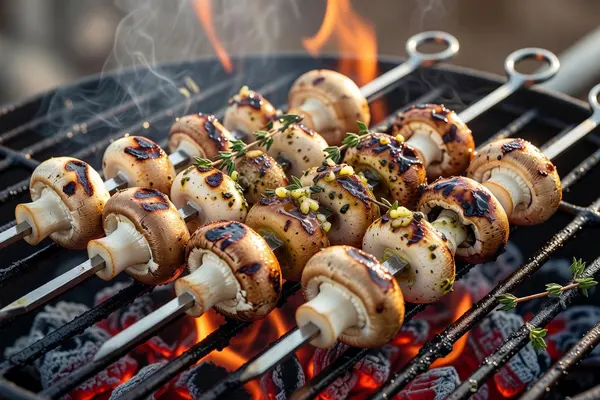 7 minHow to grill mushroomsGrill mushrooms over medium-high direct heat for 8–12 minutes. Whole caps go on the grate, small mushrooms on skewers, delicate ones in foil.