Sourcing and the slice test
Cook puffball only from a reputable market or from a wild sample verified by a qualified expert who handled the actual specimen — not a photo, not an app, not a comparison against pictures online. Never eat an unknown wild mushroom.
One check matters enough to repeat on every puffball, including ones you are confident about. Cut it in half from top to bottom and look at the cut face. An edible puffball is pure white, uniformly firm, and completely featureless inside, with no structure of any kind.
Two things you might see instead. Both mean discard:
- A yellow, olive, brown, or purple tint. The spores have started to develop; the mushroom is past eating and will taste bitter.
- The faint silhouette of a cap, gills, or a stem. It is not a puffball at all but the immature button of another mushroom, and some of those are deadly.
What the slice test does not tell you
It is a safety habit, not an identification method. Cutting a mushroom open does not tell you the specimen is a puffball — only that a specimen you already had verified has not been mistaken for something with internal structure. The verification has to come first, from a market or an expert who handled it.
What it actually tastes like
Very mild, and closer in character to a fresh cheese or firm tofu than to a woodland mushroom. There is a clean, faintly nutty savour and almost none of the dark, earthy depth of a cremini or porcini. The texture is what people remember: dense and custardy when it is cooked well, a little like a thick slice of aubergine that has held its shape.
That mildness makes it a carrier rather than a star. It takes garlic, herbs, browned butter, soy, miso, or a hot chilli oil and gives them a substantial body to sit on, which is why so many puffball recipes are really seasoning recipes.
Cut it into slabs, not cubes
This is the decision that most affects the result. Puffball is close to 90 per cent water, so it needs as much pan contact as you can give it and as little trapped moisture as possible.
A 1/2-inch slab has two broad flat faces that brown, and it holds together when you turn it. Cubes have six small faces, never sit still long enough to colour, and release their water into a crowded pan, where the whole lot simmers grey.
If the puffball is very large, cut it into steaks first and only then decide whether to halve them. A wide slab is easier to handle than it looks, and it can always be cut on the plate.
Why it browns faster than you expect
Most mushrooms make you wait: cremini and portobello release water for several minutes before the pan is dry enough to brown, which is the whole point of the technique on the pan-cooking page. Puffball behaves differently because you have already removed much of that water by salting and blotting, and because its flesh is soft and open rather than dense.
The surface reaches browning temperature quickly, and it will go from golden to bitter in under a minute if you leave it. Set a shorter mental timer than you would for a portobello and look at the third minute rather than the sixth.
Where puffball fits in the autumn kitchen
Giant puffballs appear from late summer into autumn, at the same time as several other species worth cooking, and they are the most perishable of the group. If a haul arrives together, cook the puffball first, on the day. Chicken of the woods keeps a couple of days in the fridge and rewards longer cooking; chanterelles hold better still and want a dry pan; morels belong to spring rather than autumn but share the one habit worth carrying across all of them — cut the mushroom open and look inside before it goes anywhere near a pan.
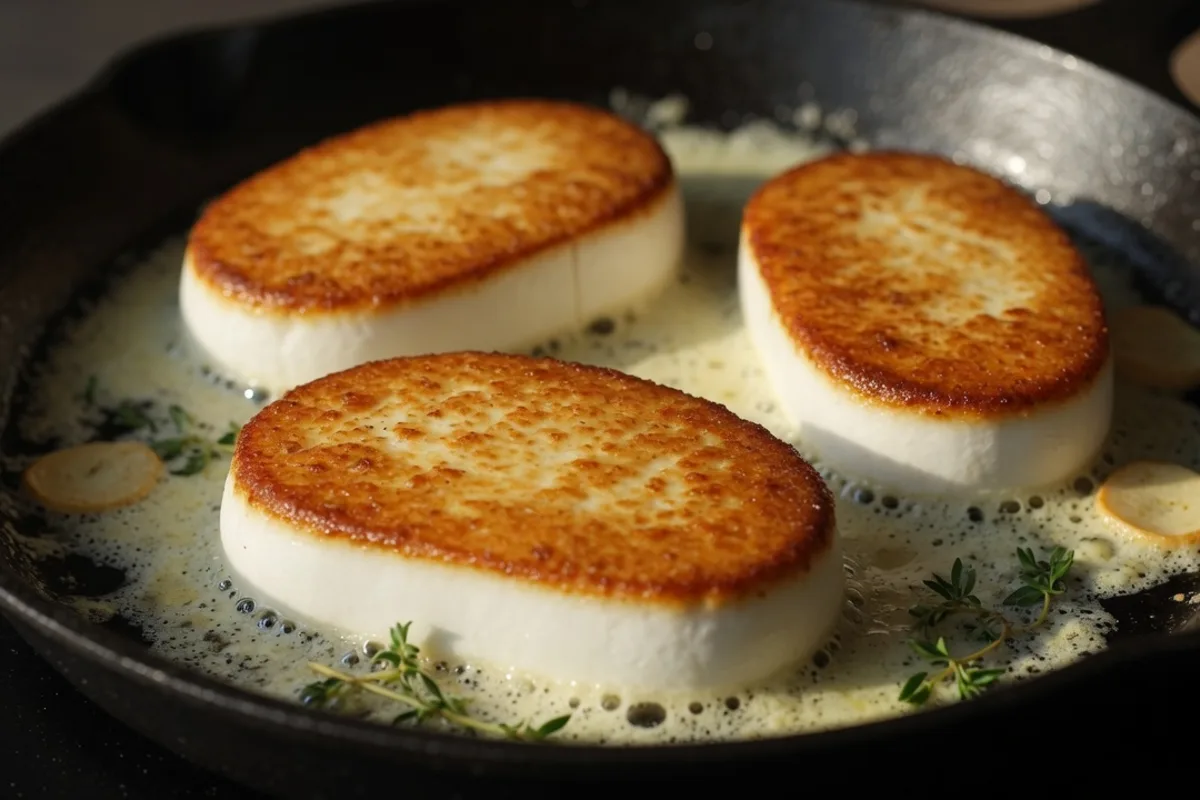
Seared Puffball Steaks
Ingredient amounts are scaled. The steps below still quote the original amounts — follow the list above.
Ingredients
Instructions
Cook times
| Method | Time | Done when |
|---|---|---|
| Pan sear | 6–8 min | Both faces deep golden, centres custardy not squeaky. |
| Grill (slabs) | 6–8 min | Grill-marked and tender; cut 3/4 inch thick so slabs hold. |
Small fixes that matter
- If the source or the identification is uncertain, do not cook or eat the mushroom.
- Salt and blot before the pan, not in it. Salting in the pan draws water out over the heat and the slabs stew.
- A crowded pan is the usual reason puffball goes grey and rubbery. Cook in two batches rather than overlapping the slabs.
- Cook it the day you get it. Puffball has the shortest useful life of any mushroom on this site.
Variations
- Breaded: dip salted, blotted slabs in flour, then egg, then breadcrumbs, and shallow-fry until golden on both sides. The most popular way to serve puffball, and the mildness is the reason it works.
- Garlic and soy: swap the lemon for 1 tbsp (15 ml) soy sauce added off the heat, and finish with sliced spring onion.
- Puffball toast: pile the finished slabs on thick sourdough rubbed with a cut garlic clove, with a fried egg on top.
- Grilled: brush 3/4-inch slabs with oil and grill over medium-high direct heat for 3 to 4 minutes a side. Cut them thicker for the grill so they do not fall through.
Storage and reheating
- Cook puffball the day you get it. It is the most perishable mushroom on this site and a day in the fridge visibly softens it.
- If you must hold it, wrap it loosely in paper and refrigerate for no more than 24 hours. Do not seal it in plastic.
- Yellowing inside means it is past eating, not merely tired. Discard it rather than trimming around it.
- Cooked puffball keeps 3 days in a sealed container in the fridge. Reheat in a dry pan over medium rather than a microwave, which turns it spongy.
- Raw puffball freezes badly — it collapses to water on thawing. Sear the slabs first, cool them, and freeze those instead.
Frequently asked questions
How do I know a puffball is safe to eat?
The only reliable answer is that it was bought from a reputable market or verified by a qualified expert who handled the specimen itself. On top of that, always cut it open: the inside must be pure white, firm, and completely featureless. Any yellow or brown tint, or any outline of a cap, gills, or stem, means discard it.
Why did my puffball turn out rubbery and grey?
Almost always a crowded pan or skipped blotting. Puffball is mostly water, so if the slabs overlap or go in damp, the pan drops below browning temperature and they stew in their own liquid. Salt, rest, blot, and cook in two batches.
Do I need to peel a puffball?
Trim the outer skin off, yes. It is thin but tough and it does not soften in the pan. Take off any discoloured patch at the same time.
Can I eat a puffball that has gone yellow inside?
No. Yellow, olive, or brown flesh means the spores have started to develop. It will taste bitter and is no longer considered edible. Discard the whole thing rather than cutting around the discoloured part.
How thick should I cut the slabs?
About 1/2 inch (1 cm) for a pan, and closer to 3/4 inch for a grill so they hold together over the bars. Thinner than 1/2 inch and they dry out before they colour.
Can I cook puffball like a portobello?
The cut is similar but the timing is not. Puffball has already given up much of its water by the time it hits the pan, so it browns in 3 to 4 minutes a side rather than the 8 to 12 minutes a portobello wants. Watch it earlier than you think you need to.
Good with
toasted sourdough, a fried egg, creamy polenta, roasted tomatoes, a sharp green salad.
Related guides
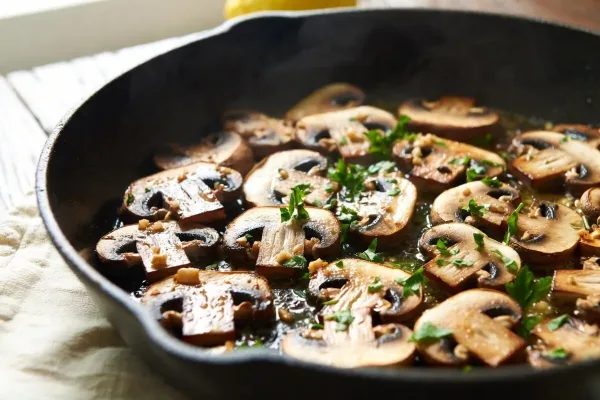 6 minHow to cook mushrooms in a panCook mushrooms in a hot pan until browned and juicy, with simple timing for tender centers, crisp edges, and a savory finish.
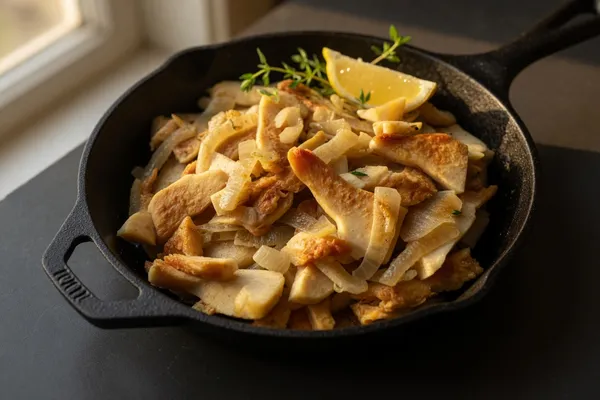 8 minHow to cook chicken of the woodsChicken of the woods needs longer cooking than most mushrooms — 15 to 20 minutes. Use the young tender growth, slice across the grain, and cook it through.
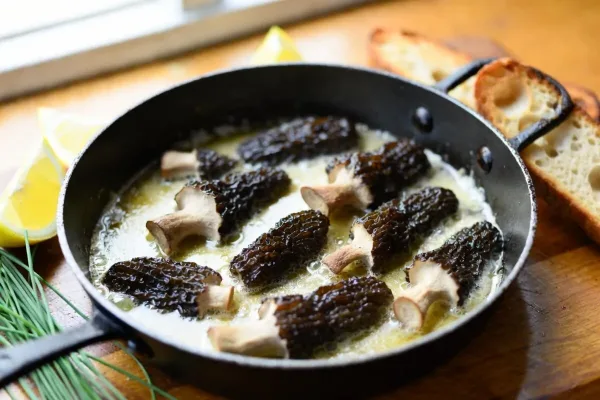 7 minHow to cook morel mushroomsLearn how to clean and cook morel mushrooms safely with butter, garlic, and herbs for a crisp outside and tender, earthy center.
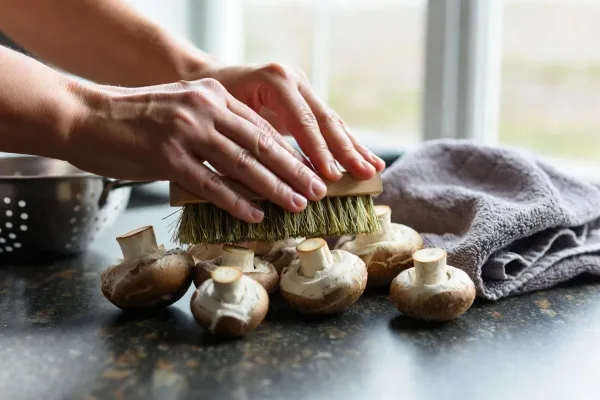 4 minHow to clean mushrooms before cookingClean mushrooms with a brush, damp towel, or a quick rinse—never a soak. What to use for each variety so they brown instead of steam.
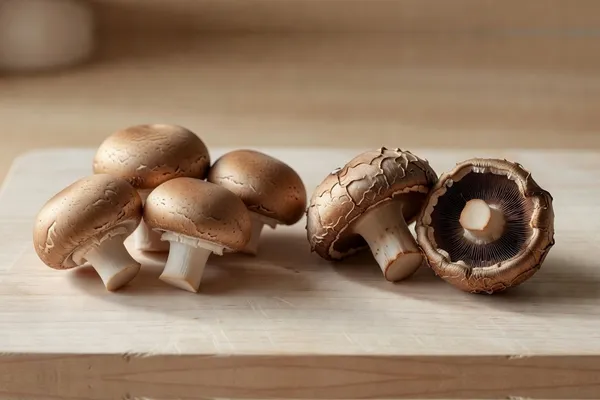 6 minHow to tell if mushrooms are badMushrooms have gone bad when they feel slimy, smell sour or fishy, or grow fuzzy mold. Wrinkles and dark caps are usually still fine to cook.
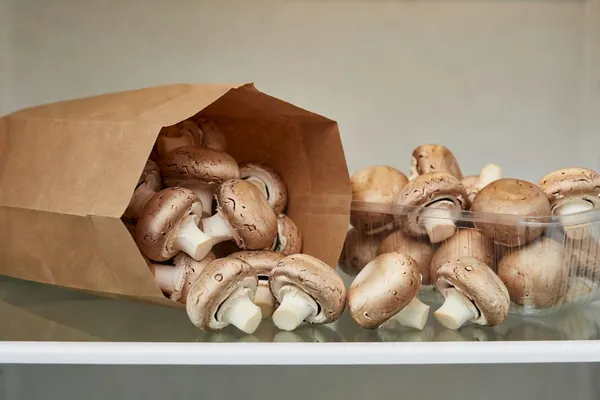 6 minHow to store mushrooms so they stay firmStore mushrooms unwashed in their vented carton or a paper bag on a main fridge shelf, never sealed plastic. Shelf life by variety and when to cook them.