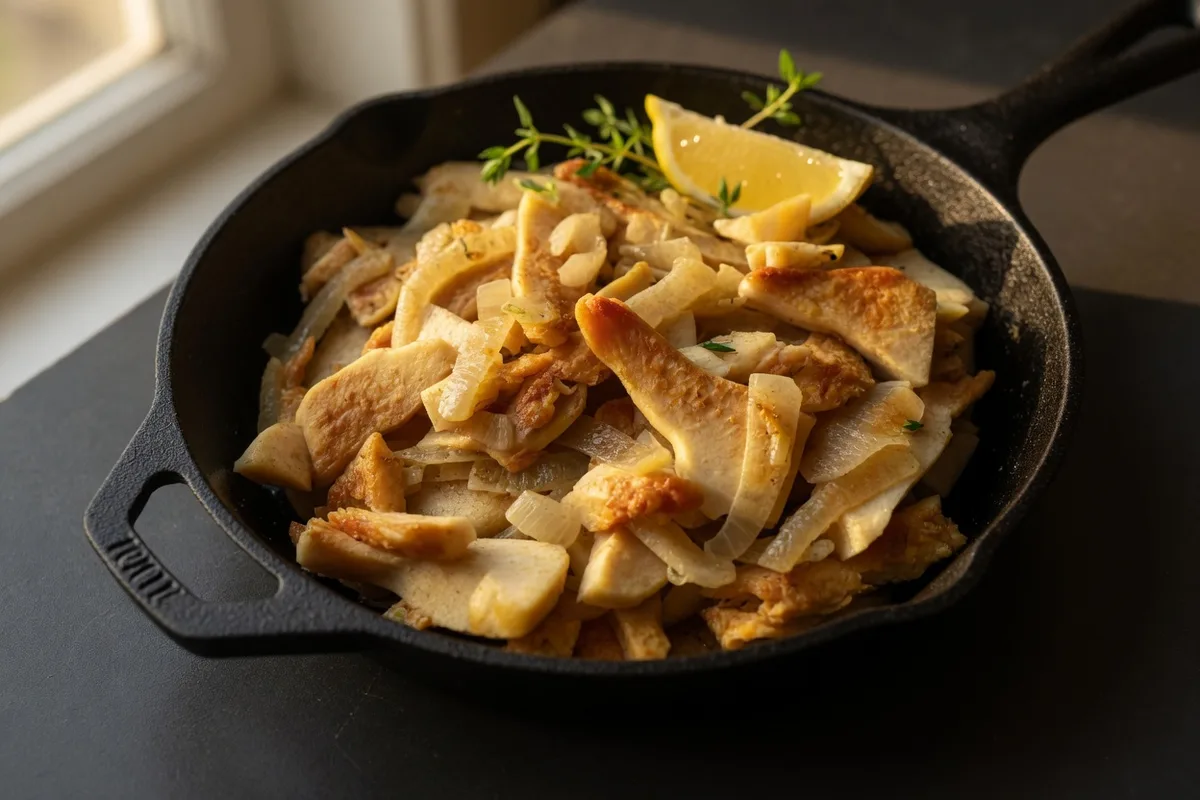
Sourcing and safety
Cook chicken of the woods only from a reputable market or from a wild sample verified by a qualified expert who handled the actual specimen — not a photo, not an app, not a comparison against pictures online. Never eat an unknown wild mushroom. Cook it thoroughly and serve it hot; it is not eaten raw or lightly cooked.
One further caution specific to this species: a minority of people report digestive upset after eating chicken of the woods even when it was correctly identified and properly cooked, and reports cluster around older specimens and around mushrooms taken from conifers or eucalyptus rather than oak.
The practical response is the one experienced cooks use — eat a small portion the first time, cooked through, and wait a day before eating more.
Only the young growth is worth cooking
This is the single decision that determines whether the meal is good. A young bracket is soft, bright, and faintly moist at the edge; it cuts like a firm chicken breast. As it ages it turns pale, dries out, goes chalky or fibrous, and develops a sour edge that no amount of butter fixes.
Age runs from the outside in, so a large bracket is often worth harvesting for its outer two or three inches alone with the rest discarded. Test with the knife before you commit the pan to it: if a slice crumbles rather than cuts, or if you feel the blade dragging through fibre, that piece is past it.
What it actually tastes like
Mild — far milder than most people expect from something that looks so dramatic. There is a soft savoury flavour with a faint lemony note, and very little of the earthy, dark taste of a cremini or a porcini. The reason for its reputation is texture rather than flavour: dense, layered, and fibrous in a way that pulls apart like poultry meat, which is where the name comes from.
That mildness makes it a carrier. It takes a marinade, a hot sauce, or a breadcrumb coating better than almost any other mushroom, and it is why the buffalo and fried preparations below are the ones most people come back to.
Chicken of the woods vs hen of the woods
Two different mushrooms with names built to be confused. Chicken of the woods (Laetiporus) grows as a solid, bright orange-and-yellow shelf on the side of a tree, and cooks like a dense slab of meat — it needs long, moist heat to get through the middle.
Hen of the woods, better known as maitake (Grifola frondosa), grows as a grey-brown ruffled cluster at the base of a tree, and cooks in half the time because the fronds are thin. If you have a ruffled, feathery cluster rather than a solid orange shelf, our maitake guide is the page you want; the technique here will overcook it.
Cleaning it
Brush, wipe, and trim — that is the whole job. Chicken of the woods grows above the ground on a trunk rather than in soil, so it arrives far cleaner than a morel or a chanterelle, and the dirt that is present sits on the surface. Its structure is genuinely absorbent, so a rinse under the tap costs you the browning later. Check the underside pores for insects, which do find it, and cut away any section that has been tunnelled through.
Why it takes longer than other mushrooms
A cremini is 90% water and mostly air by structure, so it cooks in eight minutes. Chicken of the woods is dense, layered, and low in free water, which means heat travels through it slowly and there is no burst of released moisture to help. Every method below therefore either runs longer than you expect or adds moisture back — a covered pan, a broth, a pre-steam before frying. Skipping that step is the most common way this mushroom disappoints people: the outside looks perfect and the middle is dry and squeaky.
| Cut | Method | Time | Best for |
|---|---|---|---|
| 1/2-inch slabs, across the grain | Sear, then covered finish | 15–20 min | The default. Browned faces, tender centres, works with any sauce |
| 1-inch cubes | Oven roast at 400°F / 200°C | 25–30 min | Hands-off batches; toss halfway, expect crisp edges |
| Torn into strips | Shallow fry, breaded | 6–8 min after a 10-min pre-steam | Nuggets and buffalo pieces — pre-steam or the coating burns first |
| Thin 1/4-inch slices | Pan sauté | 10–12 min | Pasta and tacos, where the pieces finish in sauce |
| Chunks | Simmer in broth or soup | 25–30 min | Older or firmer pieces that were never going to sear well |
Pan-Seared Chicken of the Woods
Ingredient amounts are scaled. The steps below still quote the original amounts — follow the list above.
Ingredients
Instructions
Cook times
| Method | Time | Done when |
|---|---|---|
| Sear + covered finish | 15–20 min | Centres tender and steaming; no dry, chalky core. |
| Oven roast | 25–30 min | Edges browned and crisp, centres tender all the way through. |
Small fixes that matter
- If the source or the identification is uncertain, do not cook or eat the mushroom.
- The tender edge is the part worth cooking. Anything that resists the knife will resist the fork.
- The covered stage is not optional. Searing alone browns the outside of a slab and leaves the centre undercooked.
- Eat a small portion the first time you try it, even from a verified source. See the note below.
Variations
- Buffalo chicken of the woods: pre-steam the strips for 10 minutes, dredge in seasoned flour, shallow fry until crisp, then toss in 1/3 cup (80 ml) hot sauce melted with 2 tbsp (28 g) butter.
- Fried nuggets: cut 1-inch pieces, pre-steam, then coat in buttermilk and seasoned flour and shallow fry for 6 to 8 minutes.
- Tacos: sauté 1/4-inch slices with cumin, smoked paprika, and lime, then finish in the pan with a splash of stock.
- Pasta: toss the seared slabs with 8 oz (225 g) cooked pasta, 1/4 cup (60 ml) pasta water, and plenty of black pepper.
- Soup: simmer chunks in chicken or vegetable broth for 25 to 30 minutes — the method that rescues firmer pieces that would never sear well.
- Sandwich: pile the seared slabs on toasted bread with mayonnaise, lettuce, and a squeeze of lemon.
Storage and reheating
- Refrigerate fresh, unwashed brackets in a paper bag for 3 to 5 days. It holds longer than a morel but the tender edge dries out first — cook that part soonest.
- Refrigerate cooked chicken of the woods in a covered container within 2 hours and use it within 3 to 4 days.
- Freeze it cooked, never raw: sauté the slices, cool them, freeze in a single layer, then bag. 3 to 4 months for good texture.
- Drying is a poor fit for this species — it rehydrates stringy. Cook and freeze instead.
Frequently asked questions
Can you eat chicken of the woods raw?
No. It is cooked thoroughly and served hot, never raw or lightly cooked. Raw or undercooked specimens are the most common cause of the digestive upset this mushroom is sometimes blamed for.
How long do you cook chicken of the woods?
15 to 20 minutes for 1/2-inch slabs — roughly 8 minutes of searing followed by 6 to 8 minutes covered with a splash of liquid. Oven roasting takes 25 to 30 minutes. It is nearly twice as long as a cremini needs, and the extra time is not optional.
What does chicken of the woods taste like?
Mild and softly savoury with a faint lemony note — much less earthy than a cremini or porcini. Its appeal is the dense, layered, pull-apart texture rather than a strong flavour, which is why it carries sauces and coatings so well.
Why does chicken of the woods make some people sick?
A minority of people report digestive upset even from correctly identified, properly cooked specimens, and the reports cluster around older mushrooms and around ones taken from conifers or eucalyptus rather than oak. Use young growth, cook it through, and eat a small portion the first time.
How do you know when it is done?
The centre of a slab is tender and steaming hot, with no dry or chalky core and no squeak against the teeth. A fork should go in without resistance, the same test you would use on a potato.
How do you clean chicken of the woods?
Brush off surface dirt and wipe with a damp cloth. Do not soak or rinse it — the structure is absorbent and the water it takes on will stop it browning. Check the pores underneath for insects and cut away any tunnelled sections.
Can you freeze chicken of the woods?
Yes, and it is the best way to keep it. Cook it first — sear or sauté the slices, cool them, and freeze in a single layer. Frozen raw, it turns spongy and watery on thawing. Cooked, it keeps 3 to 4 months with good texture.
Can you dry chicken of the woods?
You can, but it is not the mushroom to dry. It rehydrates to a stringy, slightly cottony texture and gains none of the concentrated aroma that makes dried porcini or shiitake worth the effort. Cook it and freeze it instead.
What is the best way to cook chicken of the woods?
Pan-searing 1/2-inch slabs and finishing them covered is the method that suits it best, because it browns the faces and still gets heat to the middle. If you want one dish to try first, make the buffalo version — the mild flavour and firm texture are built for it.
Good with
toasted sourdough, creamy polenta, buttered noodles, roasted potatoes, a sharp green salad.
Related guides
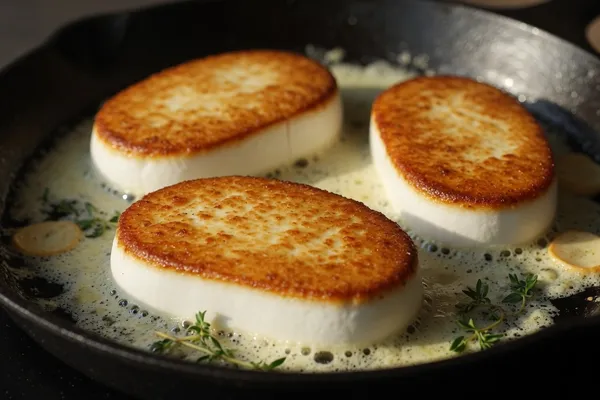 7 minHow to cook puffball mushroomsPuffball cooks like a mild steak: cut into slabs, salt, and sear hot. Slice one open first — the inside must be pure, solid white all the way through.
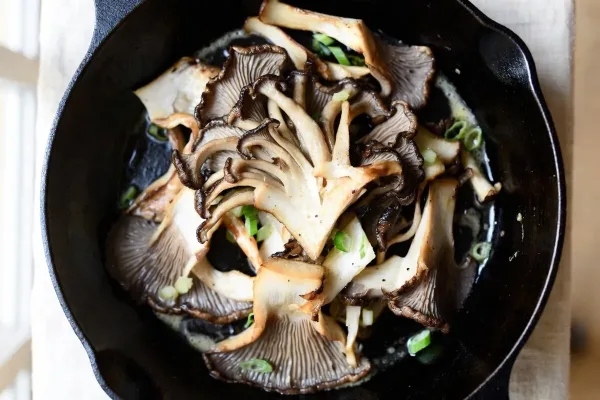 5 minHow to cook maitake (hen of the woods) mushroomsHot pan sear maitake mushrooms until the fronds turn golden and crisp, finished with garlic butter. Ready in about 12 minutes.
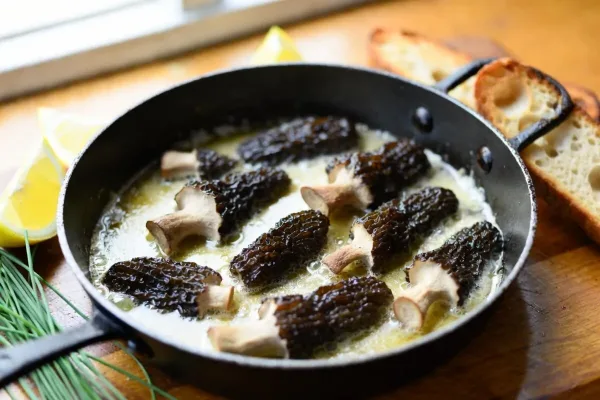 7 minHow to cook morel mushroomsLearn how to clean and cook morel mushrooms safely with butter, garlic, and herbs for a crisp outside and tender, earthy center.
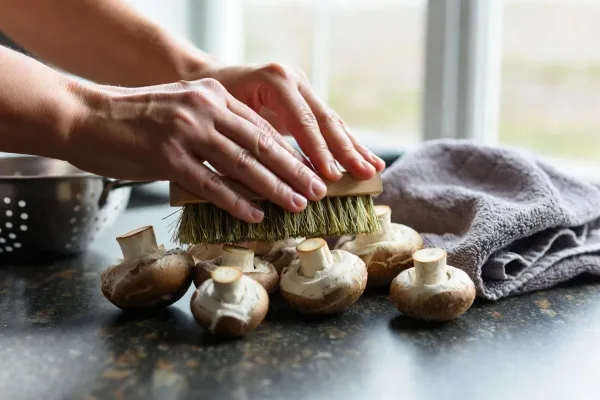 4 minHow to clean mushrooms before cookingClean mushrooms with a brush, damp towel, or a quick rinse—never a soak. What to use for each variety so they brown instead of steam.
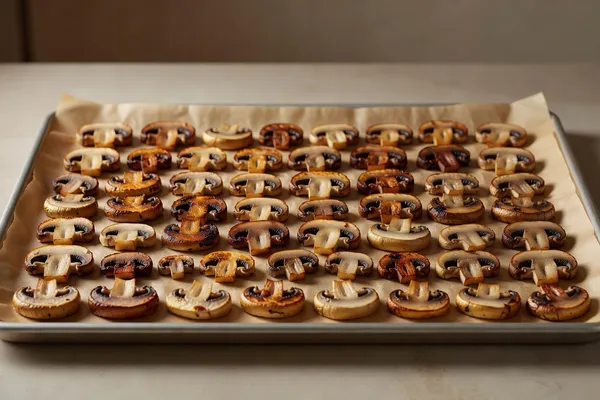 6 minHow to freeze mushrooms without ruining themFreeze mushrooms after cooking, not raw: sauté or steam them first, cool them completely, then freeze flat in portions for up to 3 months.
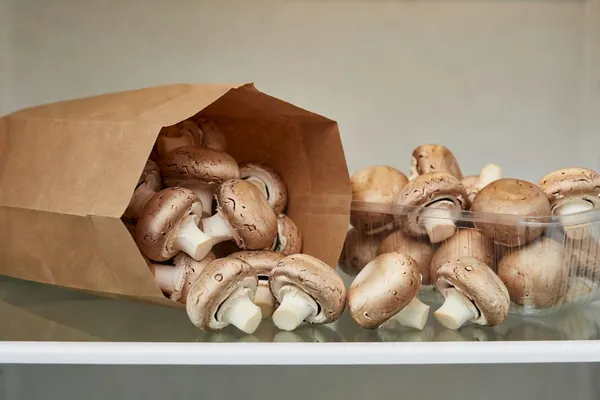 6 minHow to store mushrooms so they stay firmStore mushrooms unwashed in their vented carton or a paper bag on a main fridge shelf, never sealed plastic. Shelf life by variety and when to cook them.
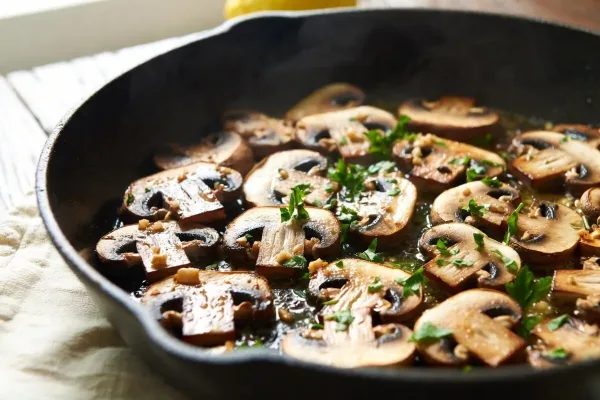 6 minHow to cook mushrooms in a panCook mushrooms in a hot pan until browned and juicy, with simple timing for tender centers, crisp edges, and a savory finish.