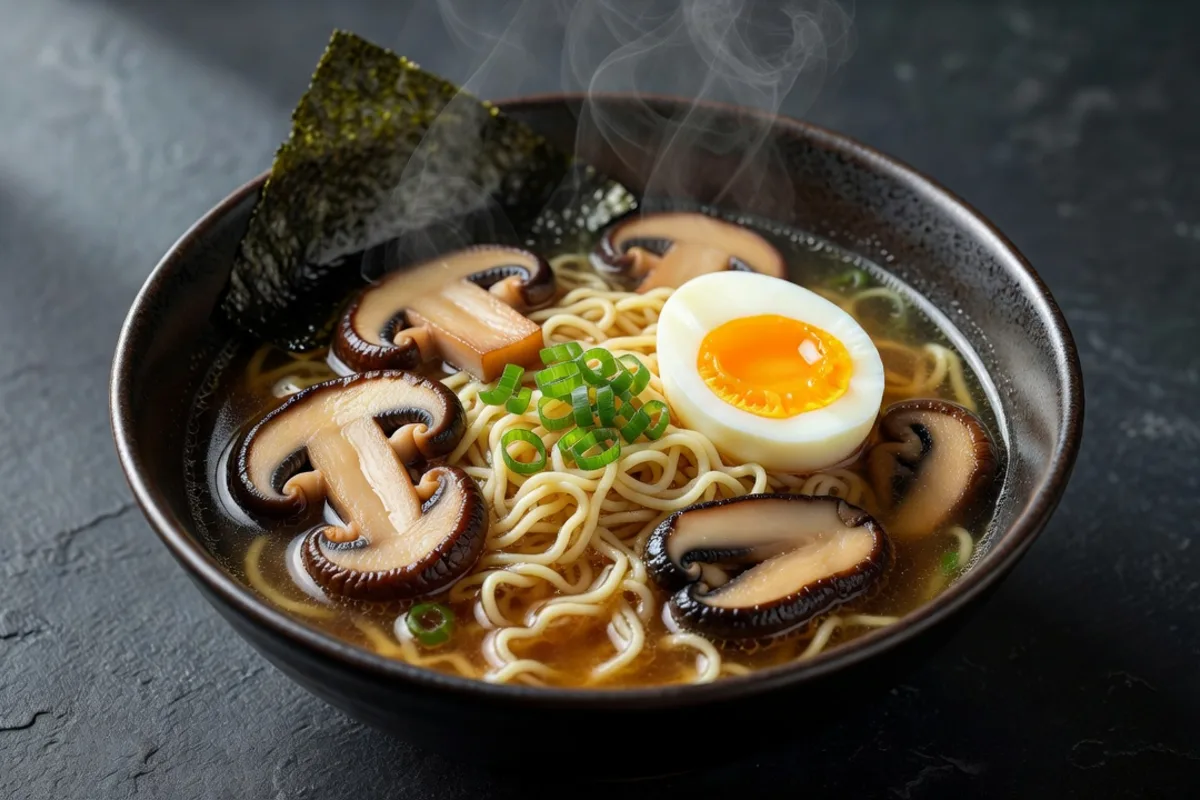
Where the flavor actually comes from
This broth has no meat and no long simmer, so the savory depth has to come from two sources working together: dried shiitake and kombu. Dried shiitake carry concentrated guanylate; kombu brings glutamate. Neither is dramatic alone, but together they read as far deeper than either one, which is why a 20-minute vegetarian broth can taste like it simmered for hours.
The two rules that decide the broth
- Never boil the kombu. Pull it out as small bubbles appear at the pot edge — past that it turns the broth bitter and slippery.
- Never boil the miso. Whisk it into a ladleful of hot broth, stir it back in, and keep the pot below a simmer from then on.
Fresh and dried shiitake do different jobs
The dried mushrooms build the broth and come out tender but soft. The fresh caps get seared separately so they arrive at the bowl with browned edges and a firm bite. Using only one kind gives you either a flat broth or a bowl with no texture — the recipe wants both.
Building the bowl
- Broth first, hot and just below a simmer.
- Noodles cooked separately in plain water and drained well.
- Noodles into the bowl, broth ladled over them.
- Seared caps, egg, scallions, and nori on top at the last moment so the nori stays crisp at the edge.
Making it vegan
Leave out the soft-boiled egg and check that the miso and noodles are egg-free — many fresh ramen noodles are not. Fried tofu, charred corn, or a spoonful of chili crisp fill the same role the egg played, adding richness without dairy or eggs.
Shiitake Mushroom Ramen
Ingredient amounts are scaled. The steps below still quote the original amounts — follow the list above.
Ingredients
Instructions
Small fixes that matter
- Never boil kombu. Pull it the moment small bubbles appear at the edges of the pot.
- Strain and save the dried-shiitake soaking liquid — it is the backbone of the broth, not something to discard.
- Cook noodles separately. Boiling them in the broth releases starch and turns it cloudy and thick.
- Fresh shiitake stems are too fibrous to eat, but they are worth adding to the broth pot and straining out later.
Good with
soft-boiled eggs, chili crisp, bok choy, corn, bamboo shoots.
Storage and reheating
- Store the broth separately from the noodles for up to 4 days; noodles left sitting in broth turn to mush.
- The broth freezes well for up to 3 months. Freeze it before adding the miso, then whisk fresh miso in when reheating.
- Reheat the broth to just below a simmer and cook fresh noodles to order.
Frequently asked questions
Can you use only fresh shiitake for ramen broth?
You can, but the broth will be noticeably thinner. Drying concentrates shiitake flavor, and the dried mushrooms are what make a 20-minute broth taste long-simmered. Fresh caps are for texture on top.
Why did my ramen broth turn bitter and slippery?
The kombu boiled. Pull it out just before the water reaches a boil — once it cooks at full heat it releases the compounds that make broth bitter and gives it a slick texture.
Can you cook the noodles in the broth?
No. Noodles release starch as they cook, which turns the broth cloudy and thick. Cook them in a separate pot of water and drain well before they go into the bowl.
How do you make this ramen vegan?
Skip the egg and check the noodles and miso for egg or dashi. Fried tofu, charred corn, or chili crisp replace the richness the egg was providing.
Can you make the broth ahead?
Yes, and it improves. Make it through the soy-and-sesame stage but leave the miso out, refrigerate up to 4 days or freeze up to 3 months, then whisk fresh miso in when you reheat.
What should you do with the shiitake stems?
Do not eat them — they stay fibrous no matter how long they cook. Drop them into the broth pot for extra flavor and strain them out with the rest of the solids.
Related guides
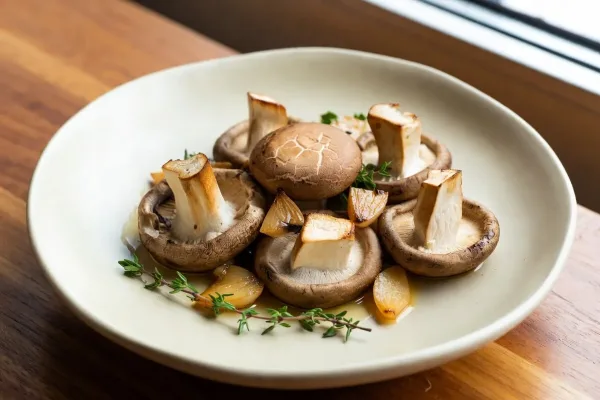 6 minHow to cook shiitake mushroomsLearn how to cook shiitake mushrooms until browned and tender, then finish them with garlic, thyme, soy sauce, and lemon.
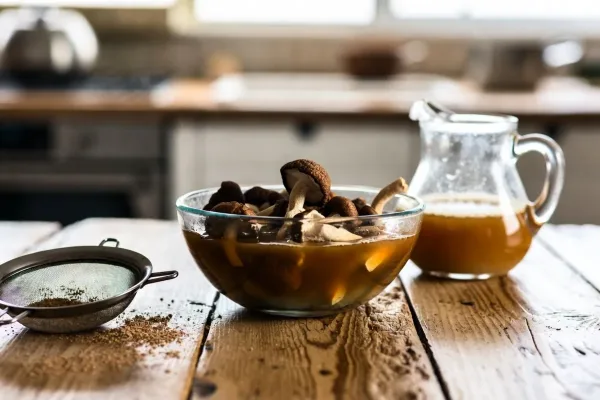 6 minHow to cook dried mushroomsRehydrate dried mushrooms in hot water for 20–30 minutes, strain the soaking liquid, and use both in soups, pasta, risotto, and rice.
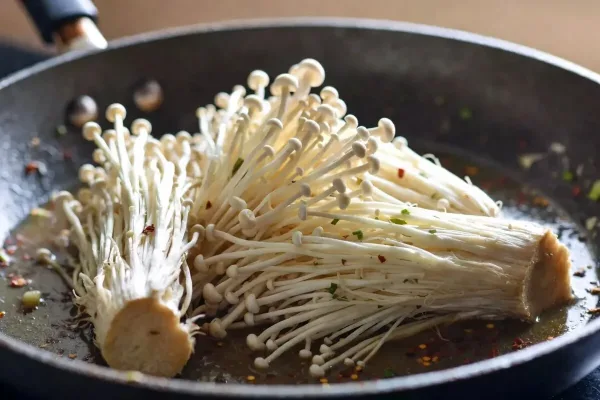 5 minHow to cook enoki mushroomsLearn how to cook enoki mushrooms thoroughly in a quick garlic-butter skillet, keeping their long stems tender and their small caps intact.
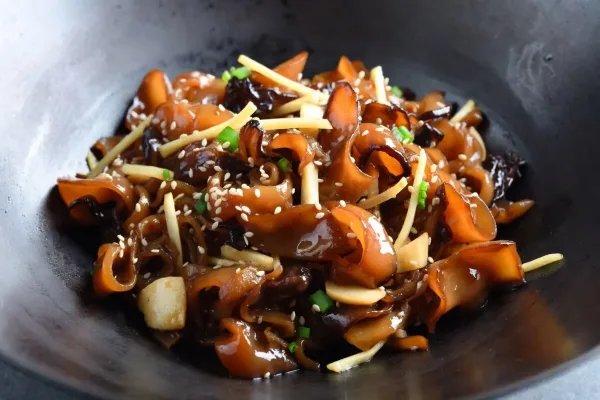 6 minHow to cook wood ear mushroomsLearn how to cook wood ear mushrooms until springy and lightly crisp, then glaze them with garlic, ginger, soy, and sesame.
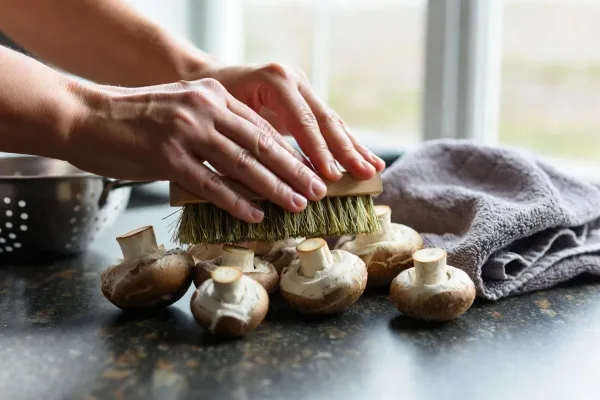 4 minHow to clean mushrooms before cookingClean mushrooms with a brush, damp towel, or a quick rinse—never a soak. What to use for each variety so they brown instead of steam.